
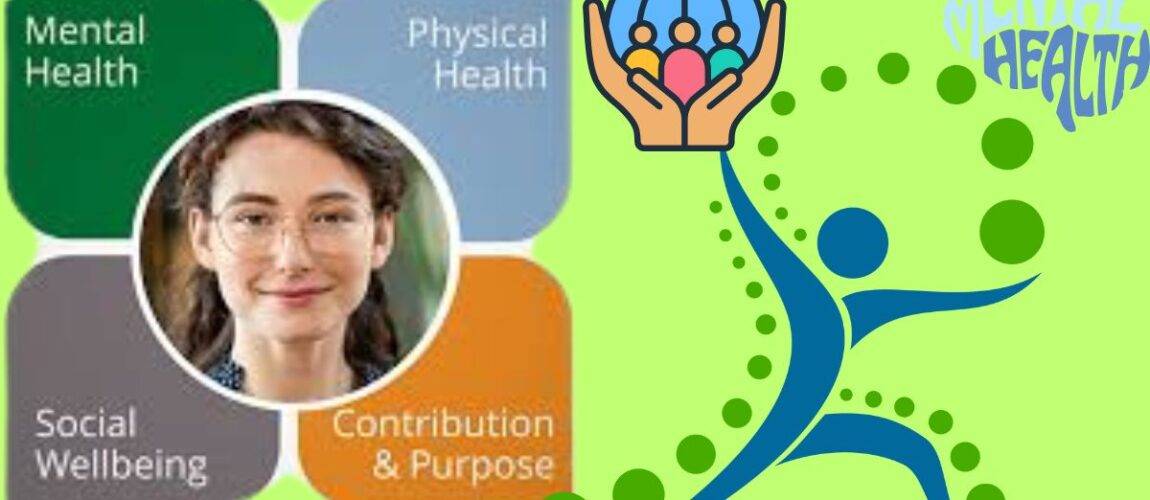
“Health is a state of complete physical, mental and social well-being and not merely the absence of disease or infirmity.” – World Health Organization
What Is the Health Triangle?
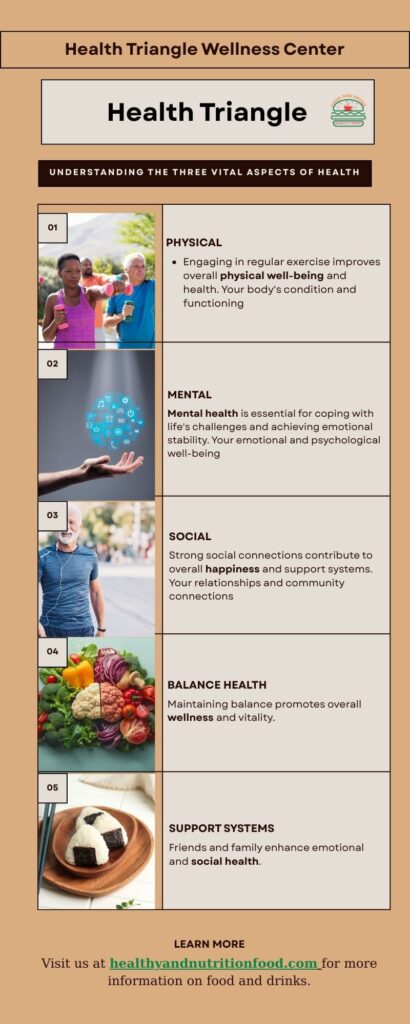
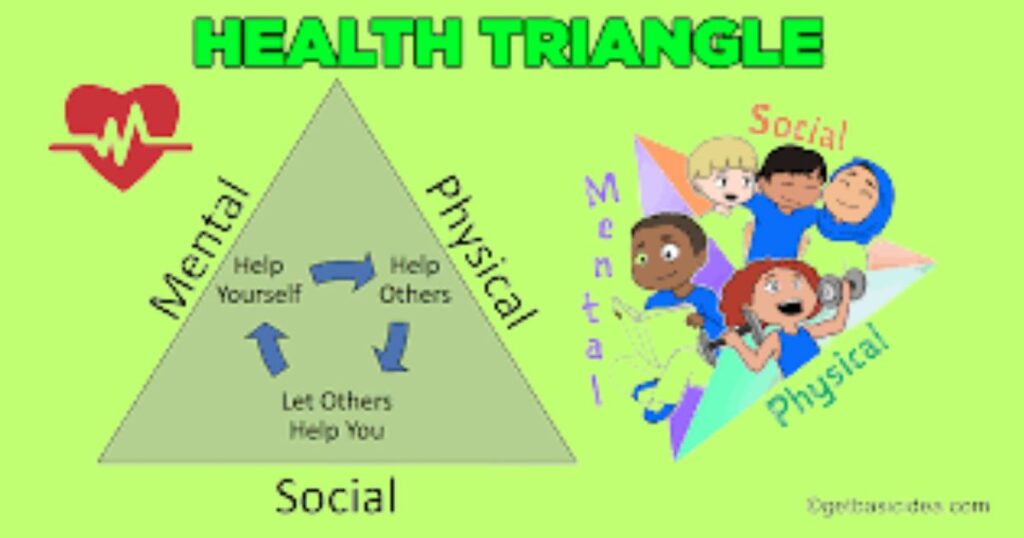
The health triangle shows us three important parts of staying healthy and happy. Think of it like a three-sided shape where each side supports the others. When all three sides are strong, you feel your best every single day.
The World Health Organization says health means feeling good in your body, mind and relationships. This is exactly what the health triangle teaches us about living well. The wellness triangle helps people understand that true health includes more than just avoiding sickness.
The Three Sides That Keep You Healthy
Physical, Mental and Social three sides keep our body fit and healthy. All the sides are described below separately.
Physical Health: Taking Care of Your Body
Physical health means your body works well and gives you energy for daily activities. This side includes eating good food and moving your body. Getting enough sleep and keeping clean are also important parts of physical wellness

Nutritional Contribution to Your Physical Health:
Nutrition helps your body get the fuel it needs to work properly every day. Eating fruits, vegetables and whole grains gives your body important vitamins and minerals. Good nutrition can help you avoid getting sick and keep your energy levels high.
Contribution of Physical Exercise to Your Health:
Exercise makes your heart stronger and helps your muscles grow bigger and more powerful. Moving your body for thirty minutes each day can make you feel happier. Walking, dancing, swimming or playing sports are all great ways to stay active.
Role of Sound Sleep to Your Health:
Sleep gives your body time to rest and repair itself while you dream peacefully. Adults need seven to nine hours of sleep each night to feel their best. Good sleep helps your brain work better and keeps your emotions balanced too.
Hygiene Improves Your Physical Health:
Taking care of your hygiene means washing your hands and brushing your teeth regularly. These simple habits help prevent germs from making you sick or uncomfortable. Clean habits also help you feel confident when you are around other people.
Regular Checkup Improves Your Physical Health:
We may get sick any time so visiting the doctor for checkups helps catch health problems before they get serious. Regular visits to healthcare providers can help you stay healthy for many years. Preventive care includes getting shots and having tests done when your doctor recommends them.

Mental Health: Caring for Your Mind and Feelings
Mental health means having a healthy mind that can handle daily challenges and stress. This includes managing your emotions and feeling good about yourself as a person. Strong mental health helps you make good decisions and solve problems more easily. “Mental health is not a destination, but a process. It’s about how you drive, not where you’re going.” – Noam Shpancer, PhD

Role of Stress Management on Mental Health:
Stress management means learning healthy ways to deal with pressure and difficult situations. Everyone feels stressed sometimes but learning to manage it keeps you feeling calm. Deep breathing, taking walks and talking to friends are simple stress management techniques.
Role of Self -esteem on Mental Health:
Self-esteem means feeling good about yourself and believing you can do important things. When you have healthy self-esteem, you feel confident in social situations and work. Building self-esteem takes practice but it helps you feel happier every single day.
Mental Health and Emotional Balance:
Emotional balance means your feelings don’t control your actions or ruin your day. Everyone has good days and bad days, but emotional balance helps you cope. Learning to recognize your feelings helps you respond to situations in healthier ways.
Skills and Mental Health:
Coping skills are the tools you use when life gets hard or things change. Good coping skills might include talking to friends, writing in a journal, or exercising. These skills help you bounce back from disappointments and keep moving forward positively.
Role of Mindset on Mental Health:
Having a positive mindset means looking for good things even when times are tough. Positive thinking doesn’t mean ignoring problems, but it helps you stay hopeful. Gratitude, optimism, and hope are all parts of a healthy positive mindset.
Simple ways to improve mental health include spending time in nature and practicing mindfulness. Meditation for just ten minutes each day can reduce stress by seventy-eight percent. Writing down three things you’re grateful for can improve your mood significantly.
Social Health: Building Strong Relationships
Social health means having good relationships with family, friends, and people in your community. This includes being able to talk clearly with others and work together well. Strong social connections help you feel loved, supported, and like you truly belong.

Social Health and Relationships:
Relationships give you people to share good times with and support during hard times. Close friendships and family bonds make life more enjoyable and meaningful for everyone. Quality relationships can actually help you live longer and feel happier every day.
Contribution of Communication Skills on Social Health:
Communication skills help you express your thoughts and feelings clearly to other people. Good communication includes listening carefully when others talk to you about important things. These skills help prevent misunderstandings and build stronger connections with people you care about.
Relationship Between Social Health and Network:
Your support network includes all the people you can count on for help. This might include family members, close friends, teachers or neighbors who care about you. Having people to call during tough times makes challenges much easier to handle.
Social Health and Community Involvement:
Community involvement means participating in activities that help your neighborhood or local area. Volunteering at local organizations or joining community groups helps you meet new people. Helping others in your community can make you feel happier and more connected.
Contribution of Teamwork and Social Health:
Teamwork skills help you work well with others to accomplish shared goals together. Whether at work, school, or in sports, good teamwork makes everything more successful. Learning to cooperate and compromise helps you build better relationships with many people.

Creating Your Personal Three Pillars of Health Plan
“Take care of your body. It’s the only place you have to live. Take care of your mind. It’s the only one you have to think with. Take care of your relationships. They’re the only ones that truly matter.” – Jim Rohn
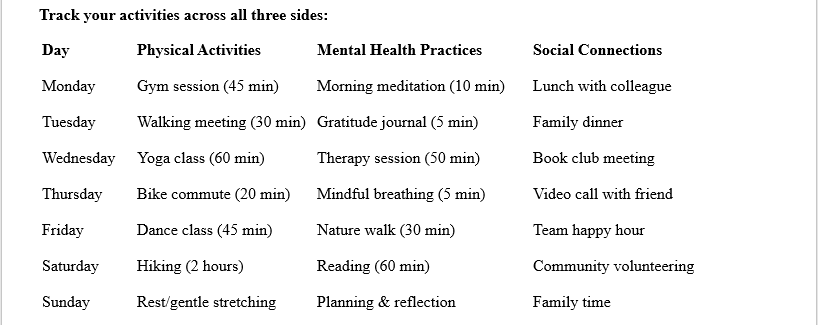
Weekly Balance Assessment
How the Three Sides Work Together
The three sides of the wellness triangle support each other in amazing ways. When you exercise regularly, your body releases chemicals that make you feel happier. Good physical health gives you energy to spend time with friends and family.
Taking care of your mental health helps you communicate better with people around you. When you manage stress well, you’re more fun to be around socially. Feeling confident about yourself makes it easier to make new friends and relationships.
Having strong social connections encourages you to take better care of your physical health. Friends can motivate you to exercise together or eat healthier meals as groups. Social support also helps reduce stress and makes you feel less lonely.
Warning Signs Your Health Triangle Needs Attention
Sometimes one side of your three health and fitness triangle becomes weaker than the other sides. When physical health suffers, you might feel tired all the time or sick. You might also feel grumpy or want to avoid spending time with people.
Mental health problems can show up as headaches, trouble sleeping, or feeling anxious. You might have trouble concentrating at work or school during difficult periods. Relationship conflicts often happen when mental health needs more attention and care.
Social health problems can make you feel lonely even when you’re around people. You might have trouble talking to others or feel like nobody really understands. Weak social health can also make your immune system weaker over time.

Building Your Own Strong Health Triangle
Creating a balanced health triangle takes planning, but you can start with small steps. Each week, try to do something good for your physical, mental, and social health. Keep track of your activities to see which areas need more attention.
Set simple goals for each side of your health triangle every single month. For physical health, you might decide to walk more steps each day. For mental health, try spending five minutes each morning thinking about good things.
For social health, make plans to talk with one friend or family member. Join a club or group where you can meet people with similar interests. Volunteering in your community is another great way to build social connections.
Simple Daily Habits for Complete Wellness
Start each morning with fifteen minutes focused on all three sides of health. Spend five minutes moving your body with stretching or light exercise activities. Take five minutes to practice deep breathing or think about positive things.
Use the last five minutes to connect with someone important in your life. This could mean sending a text message or making a quick phone call. These small morning habits can make your whole day feel better and healthier.
Before bed, think about how you took care of each side of health. Ask yourself what you did for your body, mind, and relationships that day. This reflection helps you notice patterns and make improvements for tomorrow’s activities.
Your Journey to Better Health Starts Today
The health triangle gives you a simple way to think about staying healthy. Remember that you don’t need to be perfect in all three areas. Small improvements in each area will make a big difference over time periods.
Start by picking the area that needs the most attention in your life. Make one small change and practice it for a few weeks consistently. Once that becomes a habit, add something new for a different area.
Building a strong health triangle is a lifelong journey that brings many rewards. You’ll feel more energy, happiness, and connection with people you care about. Every small step you take today helps create a healthier, happier tomorrow.

Frequently Asked Questions
- Q: What exactly is the health triangle? A: The health triangle is a wellness model that illustrates how physical health, mental health, and social health work together to create complete well-being. All three sides must be strong and balanced for optimal quality of life.
- Q: Why is balance important in the wellness triangle? A: Balance is crucial because weakness in one area affects the others. For example, poor physical health can lead to mental health challenges, which may then impact social relationships, creating a cycle that undermines overall wellness.
- Q: How can I strengthen a weak side of my health triangle? A: Start with small, consistent actions in the weakest area while maintaining the other sides. If physical health needs attention, begin with 10-minute daily walks. For mental health, try 5 minutes of daily meditation. For social health, reach out to one person weekly.
- Q: Can the health triangle help with chronic health conditions? A: Yes, the holistic approach of the health triangle can complement medical treatment for chronic conditions. Strong mental and social health can improve coping abilities and treatment outcomes, while appropriate physical activity often benefits many chronic conditions.


